
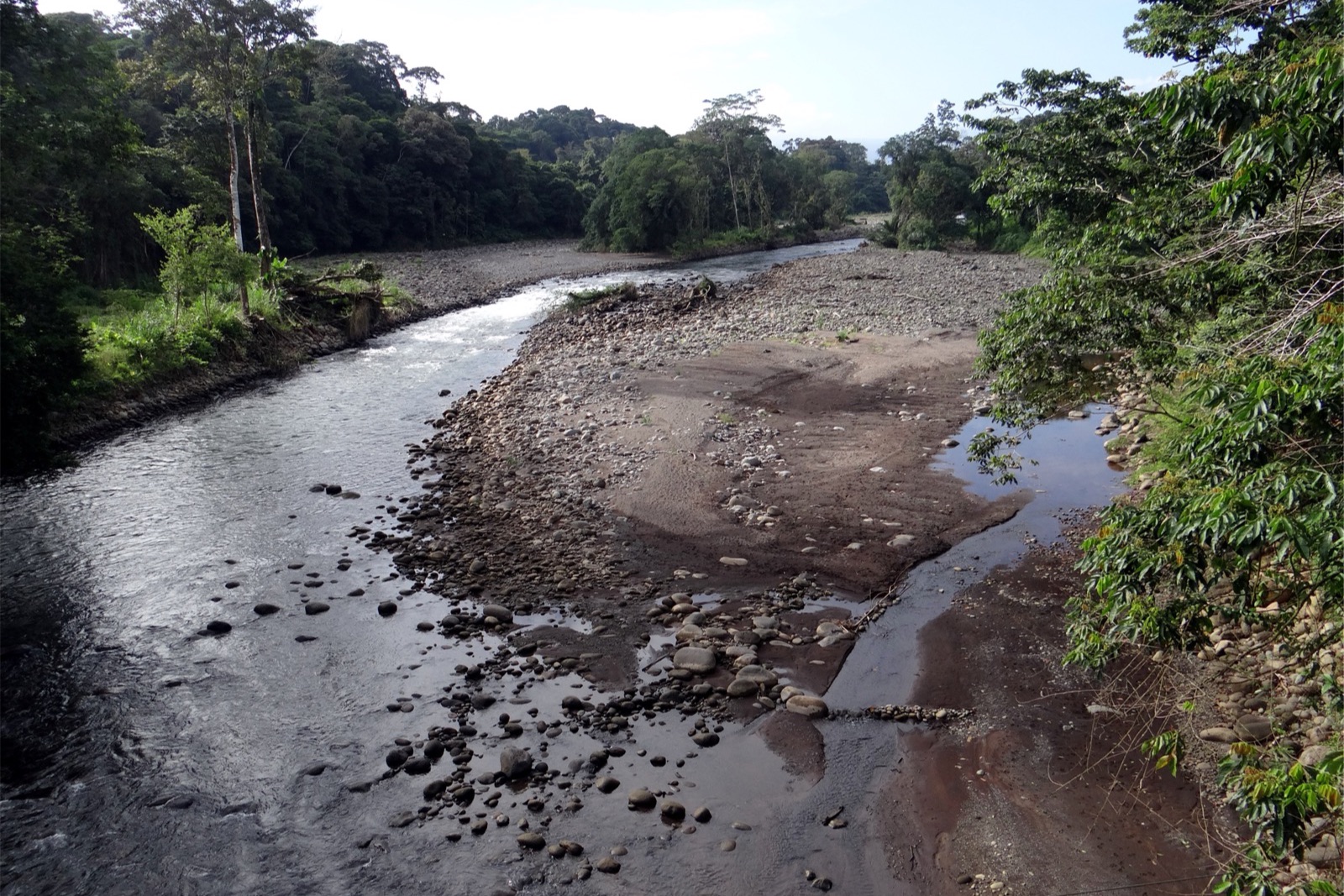
Sarapiquí, Costa Rica is the rainforest lowland about two hours north of San José, where the Sarapiquí River runs out of the mountains toward Nicaragua. People come for three things: guided walks at La Selva, a rainforest research station scientists have worked from for decades; the long suspension bridge at Tirimbina; and the river itself, by raft or by zipline.
You can see some of it on a day trip from San José, and a lot of travelers do exactly that on a rafting day. But the walks start early, and the forest is at its best at dawn, so one night here gets you far more than a long day in a van. This guide covers how to get there, what each place is like, which two activities you can book on this site, where to stay, and how to plan around the rain.
This page contains affiliate links. iTravelCostaRica may earn a commission if you book through these links, at no additional cost to you.
Where Sarapiquí is, and who it suits
Sarapiquí is a county in the north of Heredia province, on the Caribbean side of the mountains. Its town is Puerto Viejo de Sarapiquí. That name catches people out: it is a river town in the lowlands, not Puerto Viejo de Talamanca, the beach town on the south Caribbean coast. If you take a bus, ask for Puerto Viejo de Sarapiquí by its full name.
The landscape is flat, green and wet: rainforest, cattle land, pineapple farms, and fast rivers coming down off the Braulio Carrillo mountains. There are no beaches and no volcano views. What you get instead is easy-to-reach rainforest full of birds, frogs and sloths, and a river with some of the friendliest whitewater in the country.
It suits birders, families who want wildlife without a long drive, first-time rafters, and anyone driving between San José and Arenal or the Caribbean who wants a break in the middle. It suits less well someone with three days in Costa Rica who wants a beach, or anyone who will hate a rainy afternoon.
Getting to Sarapiquí from San José and La Fortuna
By car, the usual route is Route 32 east from San José, through Braulio Carrillo National Park toward Guápiles. After you cross the Río Sucio, carry on about 7 km to the turn at Rancho Roberto's, go left onto Route 4, and follow it about 30 km north. The Organization for Tropical Studies, which runs La Selva, puts the drive at about two hours.
Route 32 is the one weak link. It crosses steep, wet slopes in the national park, landslides close it several times a year, and fog near the tunnel can be thick. The Braulio Carrillo guide covers that road in detail, and it is also a good place to stop on the way.
- From La Fortuna: Hacienda Pozo Azul, one of the main adventure properties on the river, puts the drive at about an hour and twenty minutes.
- By bus: buses for Puerto Viejo de Sarapiquí leave San José from the Caribeños terminal through the day. Check the destination on the bus, for the reason above.
- On a tour: the rafting day you can book on this site collects you from your San José hotel, so you need no car at all.
La Selva Biological Station: book the guided walk
La Selva is a 1,600-hectare research station and reserve run by the Organization for Tropical Studies, with its entrance about 3 km south of Puerto Viejo. Its staff have recorded more than 460 bird species on the property. For a visitor, that means well-kept trails and guides who know the forest closely.
Day visitors can only walk the trails with a guide. The regular guided walk runs every day at 8 a.m. and 1:30 p.m., lasts about three hours, and takes no more than 12 people per guide. It costs $44 for adults and $33 for children 5 to 12. La Selva also runs an early birding walk and a night tour, and both have to be booked ahead.
Take the 8 a.m. walk if you can. Mornings are cooler and birds are more active. Overnight guests at La Selva may also walk the trails on their own, which is the best reason to stay there.
Tirimbina: the bridge over the Sarapiquí River
Tirimbina Biological Reserve sits by the village of La Virgen, about 12 km upriver from Puerto Viejo. You reach its forest across a suspension bridge 264 meters long, strung high above the Sarapiquí River, and it is the best view of the river you will get without getting wet. The photo at the top of this page was taken from it.
The reserve is open every day from 7 a.m. to 5 p.m., with about 7 km of trails and three hanging bridges. A self-guided entrance costs $23. Tirimbina also runs guided tours, including a chocolate tour, a natural history walk, birding and a night walk. Its night walk lists sloths, red-eyed tree frogs, porcupines and kinkajous among the animals you might see. Most of the guided tours need at least two people to run.
If you only have time for one of the two reserves, pick La Selva for birds and the bigger forest, and Tirimbina for the bridge, the chocolate tour and an easier self-guided visit with kids.
Rafting the Sarapiquí River
The Sarapiquí is one of the best rivers in Costa Rica for a first rafting trip. The popular stretch, between La Virgen and Chilamate, is Class II and III: real rapids, splashy and fun, with rainforest on both banks and calm pools between them. A harder Class III and IV section further upstream is run too, for people who have rafted before.
The trip you can book on this site is a full day from San José. A driver collects you from your hotel, you cross Braulio Carrillo to the river, raft the Class II and III section, and have lunch before the drive back. The listing allows about ten hours in all. It costs $105 a person, takes ages 9 to 60, and the operator states a minimum of two travelers, though the booking system accepts a single booking, so contact the operator first if you are going alone. To confirm the booking you have to give your hotel name, and you need to confirm your pickup time with the operator 24 hours before. Cancel at least 24 hours ahead for a full refund. Check the dates before you plan around it: the booking shows no 2027 departures as far as its calendar reaches.
That makes it the right booking if you are based in San José and want one adventure day without driving. The trip is built around that San José pickup, so if you are already sleeping in Sarapiquí, the Pozo Azul canopy below is the river activity you can book here without the San José round trip.
For the full picture on which river suits you, the Costa Rica white water rafting guide sets the Sarapiquí beside the Pacuare, the Balsa and the Savegre.
Ziplining over the river at Hacienda Pozo Azul
Hacienda Pozo Azul is an adventure property on the Sarapiquí River upstream of Puerto Viejo, and its canopy tour is the other Sarapiquí activity you can book here. It is two hours on nine cables through the treetops, finishing on a long cable right across the Sarapiquí River. Tours leave at 9:30 a.m., 11:30 a.m. and 2:30 p.m., and you check in at reception on the property to meet the guides.
The canopy costs $74.58 a person for ages 6 to 70, gear and guides included. Lunch is not included, though the property has its own restaurant. It is booked for a minimum of two travelers in the adult category, which starts at 18 on this listing. Pozo Azul also runs its own rafting, horseback rides and a gentle float trip, which are sold separately.
Day trip or a night in Sarapiquí?
A day trip works for one thing. The rafting day from San José is a full day on its own, and it is a good one. Trying to fit La Selva, Tirimbina and the river into one day from the capital is not: the first regular La Selva walk starts at 8 a.m., two hours from San José, so you would leave at 6 a.m. and spend the afternoon tired in the rain.
One night changes the trip. Arrive in the afternoon and walk Tirimbina's bridge or do the canopy, take La Selva's 8 a.m. walk the next morning, and still reach La Fortuna or the Caribbean by evening. Two nights let you add the river or a night walk without rushing anything.
Where to stay in Sarapiquí
Lodging here is lodges rather than resorts, mostly set in their own patch of forest. Pick by what you want to be close to.
- In Puerto Viejo, for La Selva: Ara Ambigua Lodge sits under a kilometer from town, a few minutes from La Selva's gate, with gardens and its own small forest trails. La Selva also takes overnight guests, and staying there is the only way to walk its trails without a guide.
- Quieter, out of town: La Quinta Sarapiquí Country Inn, about 11 km from Puerto Viejo, is a former farm grown back into gardens built to attract birds, frogs and butterflies.
- On the river, for the zipline and rafting: Hacienda Pozo Azul has tent suites on platforms in the forest, on the same property as its canopy and rafting, which takes the driving out of an adventure day.
Sarapiquí weather: plan for rain
Rain here is the climate, not bad luck. La Selva records about 4 meters of rain a year, and its wettest months are July, November and December. Temperatures run between about 19°C and 31°C. No month is reliably dry.
So plan around it rather than hoping. Do the walks in the morning, when it is cooler, and keep the afternoon for the bridge, the chocolate tour or the river, where getting wet does not matter. Pack a light rain jacket, quick-dry clothes, shoes that can get muddy, and insect repellent.
Sarapiquí FAQ
How far is Sarapiquí from San José?
Is Puerto Viejo de Sarapiquí the same as Puerto Viejo on the Caribbean coast?
Can you visit La Selva Biological Station without a guide?
What is the weather like in Sarapiquí?
Can you do Sarapiquí as a day trip from San José?
Is the Sarapiquí River good for beginner rafting?
Plan your Sarapiquí stop
Give Sarapiquí one night if your route allows it. Book La Selva's 8 a.m. walk, spend the afternoon on Tirimbina's bridge or the Pozo Azul canopy, and pack for rain. If you only have a day from San José, make it the rafting trip, as long as your dates fall outside its 2027 gap.
Heading on from here? The Caribbean side guide covers the coast to the east.